Founded in 2001, Bhaktivedanta College grew out of the vision of the Hungarian Society for Krishna Consciousness to establish a vibrant centre where timeless wisdom meets contemporary education. Building on the earlier work of the Bhaktivedanta Institute for Theology and Culture (established in 1998), the College was created to make India’s classical philosophical and spiritual heritage accessible to contemporary students. — It offers an environment in which students can explore philosophy, culture, yoga, and personal development within an open and supportive academic environment. The College received full government accreditation in 2004 and has continued to expand its programmes, partnerships and community ever since.
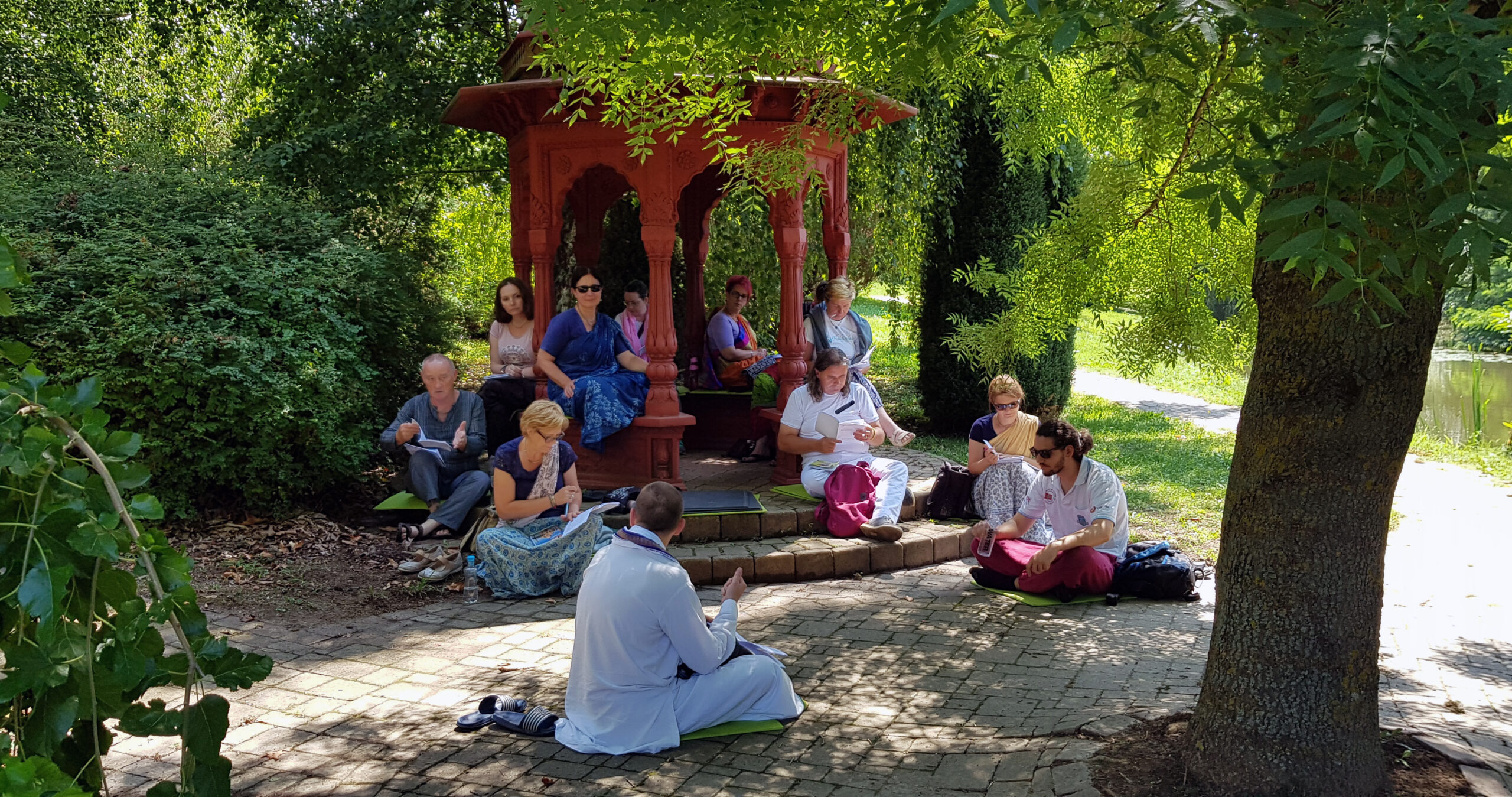
Bhaktivedanta College is the only accredited higher education institution in Hungary that represents the Vaiṣṇava theological tradition within an academic framework. Its academic programmes are grounded in the teachings of A.C. Bhaktivedanta Swami Prabhupāda, who introduced the wisdom of the Vaiṣṇava scriptures to a global audience.. The College continues to honour his legacy through its educational mission, its research, and its commitment to cultivating authentic spiritual culture. Nestled in the green belt of Budapest, the College offers not only rigorous academic study but also an inspiring environment for reflection, community, and spiritual growth.
Since September 2008, the College has operated within the two-cycle degree structure laid down by the Bologna Process. Students may earn a three-year Bachelor of Arts (BA) degree either full-time or through a part-time programme with scheduled Saturday classes. In 2009, the College launched its Vaishnava Yoga Studies BA programme, which remains unique in Europe. Today, Bhaktivedanta College offers two accredited BA programmes — Vaishnava Theology and Vaishnava Yoga Studies — as well as an accredited Master’s programme (MA) in Vaishnava Theology. Bhaktivedanta College also provides an accredited Master’s programme (MA) in Vaishnava Theology. In addition, further degree programmes, including an MA in Vaishnava Yoga Studies and a PhD in Vaishnava Theology, are under development.
The College is open to all, regardless of religion or worldview. Students can study Vaishnava theology, philosophy, and practice, as well as yoga theory and its applied disciplines. Admission is open to all applicants who meet the entry requirements listed on the College’s website (uni-bhakti.hu).
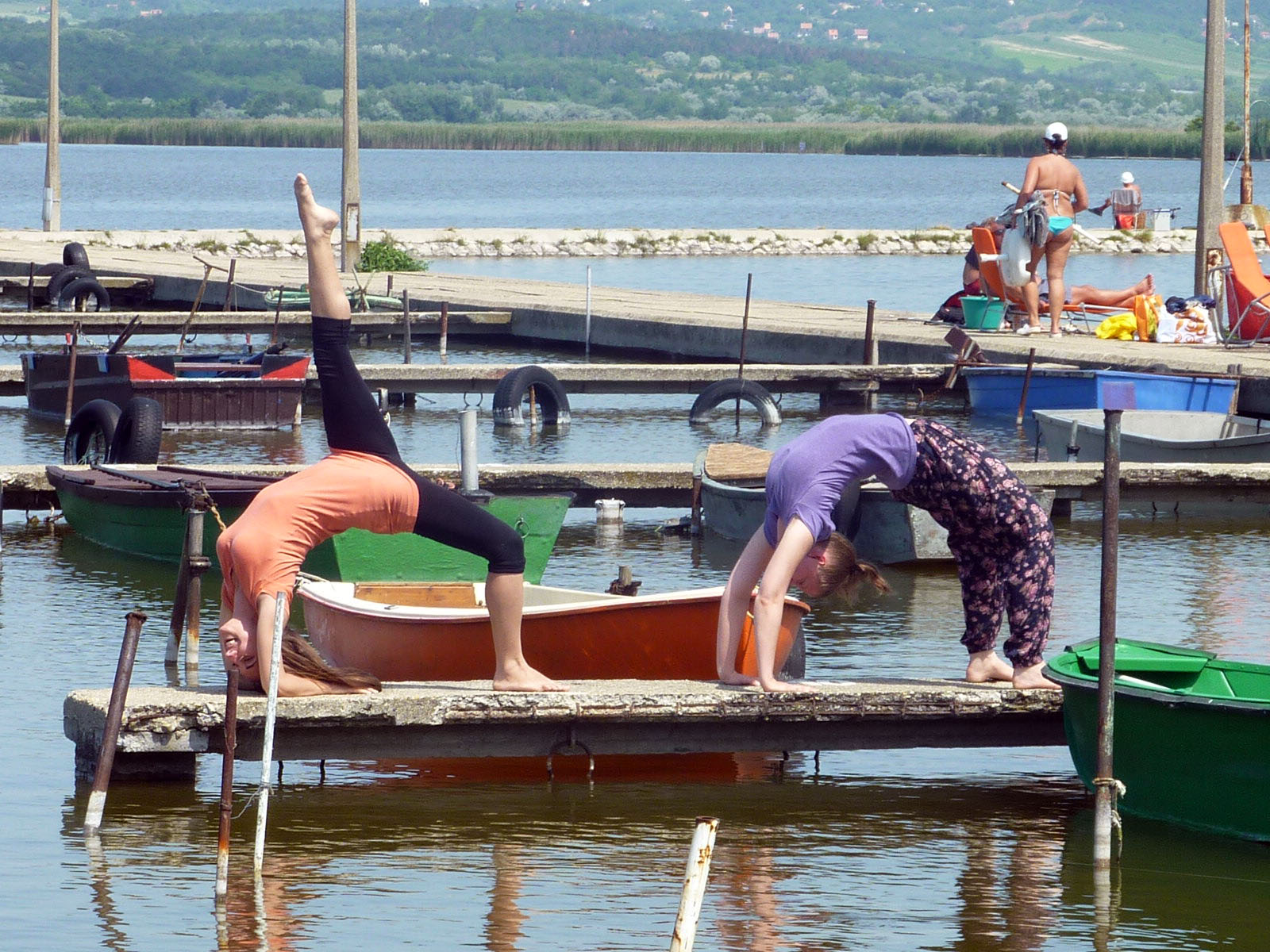
The Vaishnava Yoga Studies curriculum provides comprehensive training in both the theoretical and practical dimensions of yoga. Alongside familiar hatha-yoga asanas, students engage with Indian philosophy, yoga psychology, relaxation techniques, meditation, and the foundational principles of Ayurveda.
Since 2021, Bhaktivedanta College has continued to expand its English-language courses with the support of renowned international guest lecturers and spiritually accomplished monks. Building on more than twenty years of experience in education and with a commitment to actively participating in the global academic community, the College is developing English-language BA and MA programmes. In recent years, Bhaktivedanta College has strengthened its international presence through collaborations with universities in Europe and India and has gained membership in the ERASMUS Charter. Beginning in 2025, the College started offering two semesters of English courses to international students. Bhaktivedanta College continues to evolve, staying true to its founding principles while embracing new opportunities for growth and development.
In addition to its degree programmes, the College also offers a range of short courses for those who are interested in traditional Indian culture but are not able — or do not wish — to commit to a full BA or MA programme. These stand-alone courses provide flexible opportunities to study topics such as beginner and intermediate yoga, Ayurvedic phytotherapy, meditation and self-knowledge, Vedic astrology, Vedic philosophy, and Vedic Mathematics.
Bhaktivedanta College operates two departments: the Department of Theoretical and Applied Yoga Sciences and the Department of Theology. Our faculty members hold degrees in a wide range of disciplines, including history, Indology, Yoga Studies, theology, Sanskrit, cultural anthropology, literature, religious studies, archaeology, and the arts. Many have interdisciplinary training and combine rigorous academic expertise with personal spiritual practice, embodying the principles they teach.
In addition to teaching within the College’s degree programmes, faculty members participate in international academic and cultural initiatives, collaborate with partner institutions, and contribute to scholarly research in their respective fields. Their ongoing commitment to both academic excellence and authentic spiritual understanding ensures that the education offered at Bhaktivedanta College remains relevant, holistic, and deeply rooted in the living tradition it represents.
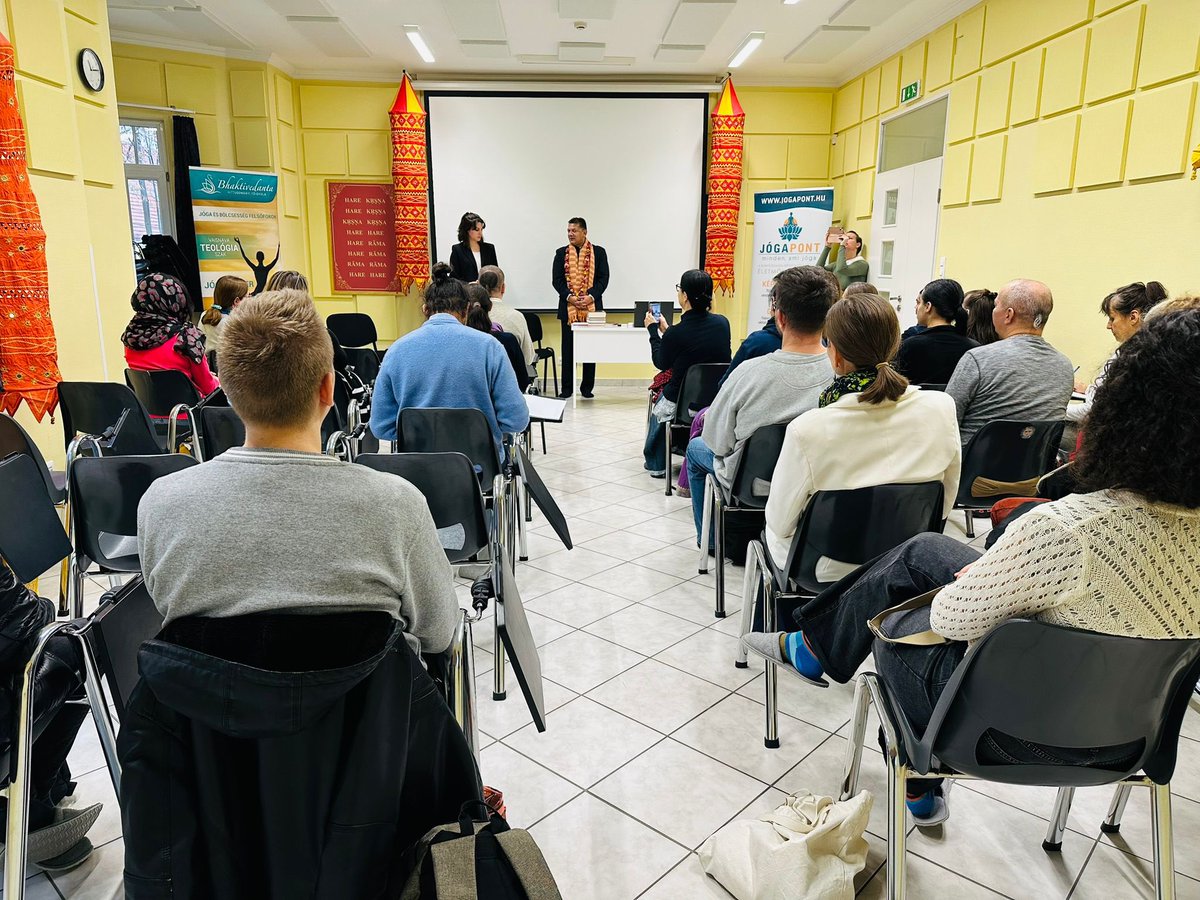
Since 2005, Bhaktivedanta College has organised an annual academic conference, originally known in Hungarian as the Létkérdés Konferencia. Over the years, the event has developed into a broad interdisciplinary forum that brings together scholars, researchers, and practitioners interested in Indian philosophical traditions, spiritual culture, yoga, Ayurveda, and related fields. Although the conference began with a focus on “existential questions,” its scope has gradually expanded, and its themes now reflect a wide range of intellectual, cultural, and spiritual topics.
Each year’s conference centres on a selected theme and features presentations, lectures, and discussions by invited speakers and experts. The event provides an important platform for dialogue between classical knowledge systems and contemporary academic inquiry, fostering both scholarly engagement and public education. Through these gatherings, participants explore Vedic wisdom, Gaudiya Vaiṣṇava thought, yoga philosophy, and the contributions of influential figures within these traditions.
Insights from the conference are often published in books, volumes, or other educational materials, contributing to both academic research and broader cultural understanding. An archive of past conferences — including recordings, summaries, and programme details — is available on the conference’s website (letkerdes.hu), offering a valuable resource for students, researchers, and anyone interested in exploring the history and development of the event.
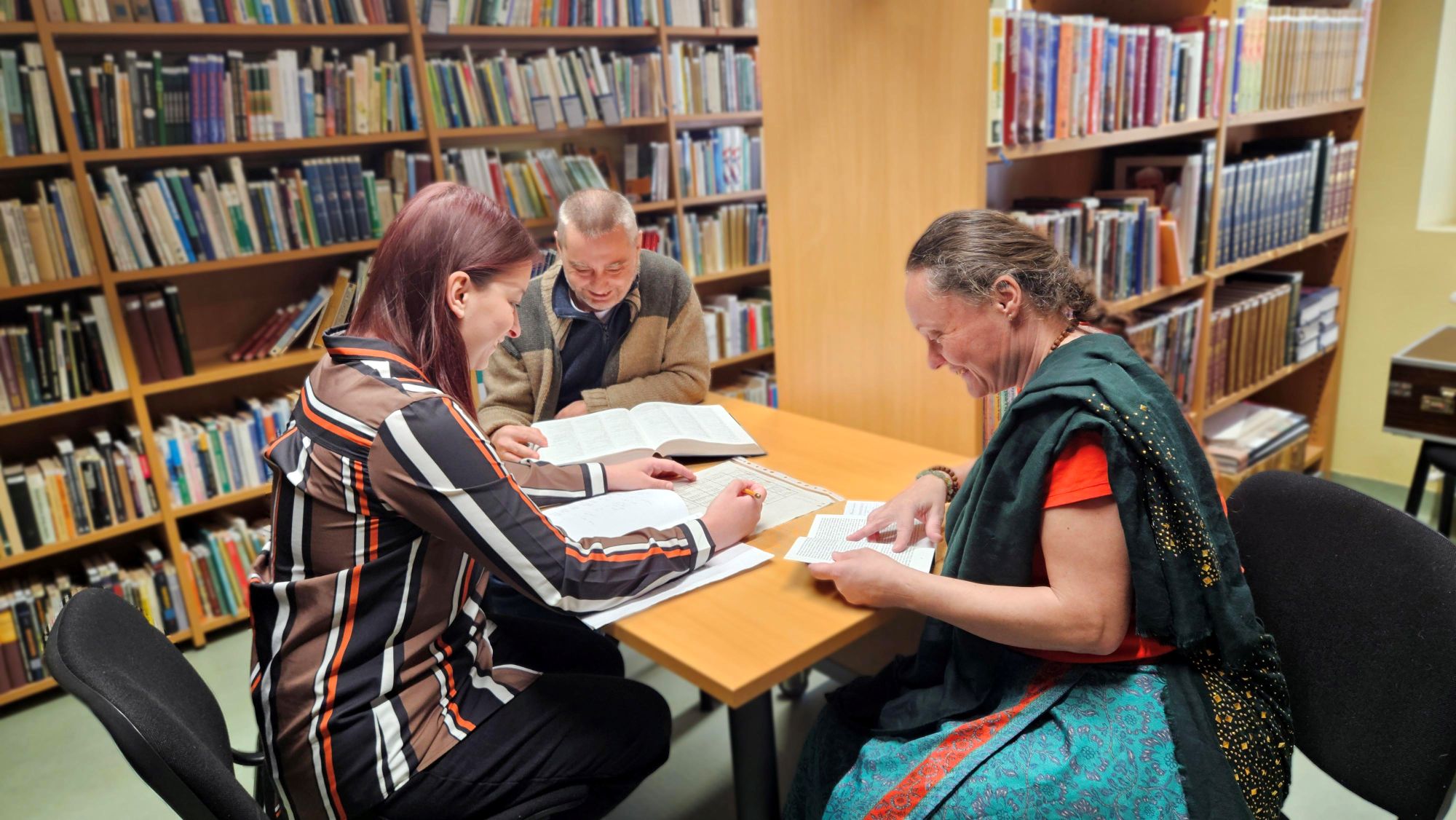
The Bhaktivedanta College Library is a comprehensive academic resource dedicated to the cultural and spiritual heritage of India, with a particular emphasis on Vaiṣṇava philosophy and South Asian traditions. Its collection supports study and research in theology, philosophy, yoga, Ayurveda, religious studies, sociology, history, psychology, and related fields. The library holds materials in Hungarian, English, Sanskrit, and Bengali — including rare scriptures, classical works, and contemporary scholarship — and serves both the College community and the wider public through its open-access policy and online catalogue.
A central strength of the library is its extensive collection of Vaiṣṇava literature, which is the most substantial in Hungary and continues to be developed with the aim of becoming one of Europe’s leading reference collections on Hinduism and South Asian studies. Altogether, the library houses approximately 9,500 Hungarian and 12,500 foreign-language volumes, along with a wide range of journals and digital resources.
The library’s holdings were significantly enriched by the Indology collection of Ildikó Puskás, a distinguished Hungarian indologist, historian, philologist, and theological researcher who also served as chairperson of the India–Hungary Friendship Society. After her passing, her remarkable collection — comprising around 3,500 books, 1,500 journals, and 200–300 manuscripts and other documents — was generously entrusted to the College by Róbert Simon. This donation greatly expanded the depth and scope of the library, creating a uniquely valuable resource for scholars specialising in Indology, Vaiṣṇava studies, and Indian intellectual traditions.
Today, the Bhaktivedanta College Library functions as both an academic and cultural hub. It supports coursework and advanced study for BA, MA, and PhD students, assists independent researchers, and offers a welcoming environment for anyone interested in exploring the philosophy, culture, and wisdom of India. The library’s online catalogue and on-site services help visitors easily navigate its extensive resources, making it a vital centre for study, reflection, and scholarly engagement.
Bhaktivedanta College maintains an active publishing programme that supports both academic research and public education. Its scholarly journal, Tattva, provides a forum for original research in Vaiṣṇava theology, Indian philosophy, yoga studies, interfaith dialogue, and the relationship between science and spirituality. The journal is available online at tattva.hu.
In addition to its academic journal, the College publishes a range of books written by faculty members and collaborators, including authoritative commentaries on Patañjali’s Yoga Sūtras, introductory works on yoga philosophy, studies in Indology, and volumes on Vaiṣṇava theology and culture. Several conference proceedings and thematic anthologies — authored by College faculty — further contribute to the fields of theology, yoga studies, and Vedic culture.
The College also supports publications intended for a wider audience, including books on applied yoga, health and well-being, and contemporary reflections on spiritual practice. Beyond printed works, Bhaktivedanta College operates the online platform jogapont.hu, which offers accessible articles and resources on yoga, Ayurveda, philosophy, and holistic lifestyle for the general public.
Through these diverse publications, Bhaktivedanta College seeks to advance scholarly research, preserve traditional knowledge, and make authentic spiritual teachings available to both specialists and the broader community.